Selling situations
Selling an inherited house
Usually the house is the simple part. The harder part is that a decision now belongs to several people at once, at a time when none of them particularly wanted a decision.
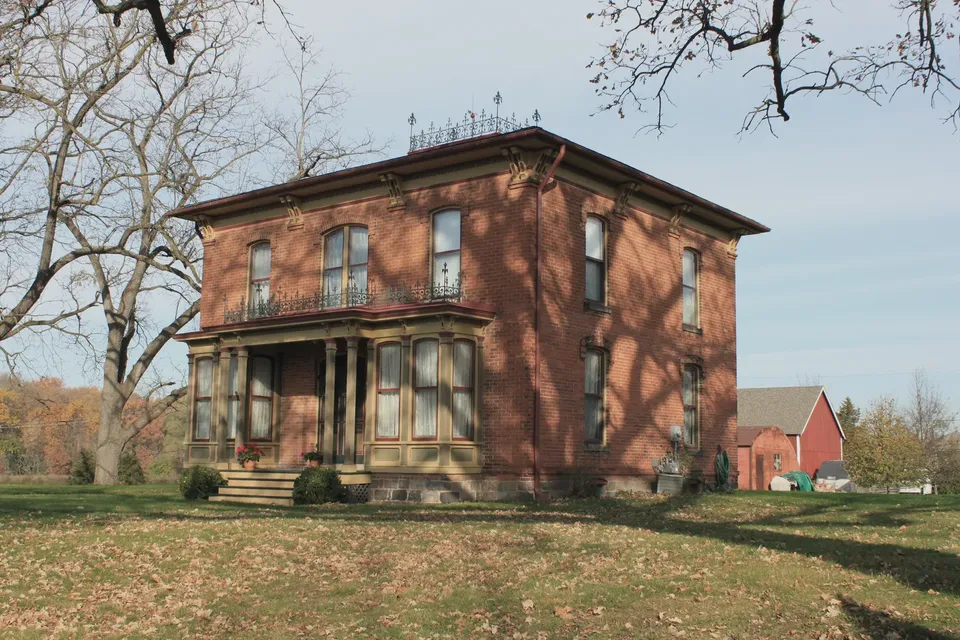
Photograph © Dwight Burdette, via Wikimedia Commons, licensed under CC BY 3.0. Cropped and colour-graded by Bayfront Home Buyers.

First: can the house actually be sold yet?
This is the question that determines everything else, and it is worth establishing before you talk to any buyer. Somebody has to have the legal authority to sign. Depending on how the property was held and what the estate looks like, that authority may already exist, or it may need to be granted through an estate administration process.
We are not going to walk you through that here. Estate procedure differs between Michigan and Indiana, it differs by circumstance, and getting it wrong is expensive. This is a question for a probate or estate attorney, and it is usually a short conversation.
What we can tell you plainly: nobody can buy a house from a person who does not yet have authority to sell it. Any company that tells you otherwise, or that offers to "handle the probate side" for you, is worth being careful with.
What usually needs sorting
Six things that come up almost every time
More than one heir
Where several people inherit together, a sale generally needs them to agree. People often want different things — one wants to keep it, one needs the money, one lives four states away. That is normal, and it is worth surfacing early rather than at the closing table.
The condition of the house
Inherited houses are frequently older and have often been lived in by someone who was, latterly, not able to keep up with maintenance. That is not a judgement. It does affect what a lender will accept from a buyer.
A mortgage or liens still attached
Inheriting a house does not clear what is owed on it. There may also be a reverse mortgage, unpaid property taxes, a contractor’s lien, or a Medicaid estate-recovery claim. These need to be identified, because they are paid out of the sale.
Personal belongings
Often the genuinely hard part. Most direct buyers, ourselves included, do not require the house to be emptied — you can take what matters and leave the rest. That is worth knowing before anyone hires a skip.
Nobody lives nearby
If the heirs are out of state, someone is still paying for insurance, utilities, lawn care and winterisation every month, and an empty house can create insurance complications of its own.
Tax consequences
How an inherited property is taxed when sold depends on its value at the time it was inherited and on your own circumstances. A tax professional will answer this in one conversation. We are not qualified to.
Choosing a route
Which route suits an estate
You know your situation better than we do. Here is the short version of each.
-
List it publicly
Fits homeowners who want broad exposure to the open market.
-
Take an offer from us
Fits homeowners who want an as-is sale and a simpler process.
-
Hold on to it for now
Still an option when selling is not yet the right decision.
Whichever way you lean, we are happy to talk it through.
Selling to us
How selling to us works
Six things worth knowing before you get in touch.
We look at the actual house
The condition, the title, and what you are hoping to do — not an address run through a calculator.
Sell as-is
No repairs to arrange first, no contractors to chase, and no clearing the place out before anyone will look at it.
No agent commissions
You are selling directly, so there is no listing commission coming out of the sale, and you can sell as-is without making repairs first.
No showings or staging
Usually one visit, sometimes none at all. You are not keeping the house tidy for strangers on a Sunday afternoon.
We put it in writing
The price and the closing date are written down, so what you agreed to is on the page rather than in somebody’s memory.
Take your time
Read it at your own pace, ask us about anything in it, and have an attorney or a real-estate professional look it over first. We would encourage that.
If you are earlier than this
If the estate has not been opened, or you are not sure whether it needs to be, talk to an estate attorney before you talk to buyers. If you would like to understand how a direct sale works in the meantime, our how it works page sets it out, and the Michigan, Indiana and Florida pages cover what is different about each state. Florida coverage is by approved area rather than the whole state.
When you are ready, tell us about the property
There is no rush from our side, and no obligation. If it turns out a listing would serve the estate better, we will say so.
Tell us about your property Call (269) 389-9961
Sending the form starts a conversation. It is not an offer, and it does not commit you to anything.