Michigan
Selling a house in Michigan
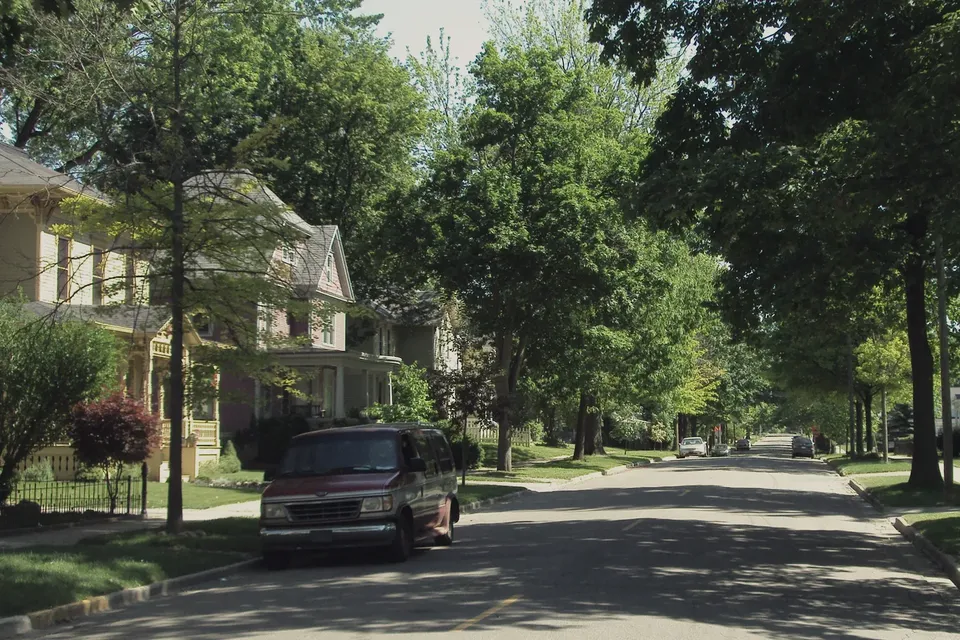
Michigan is a state of older houses — solid brick and frame homes with plaster walls, original systems, and decades of family history in them. Knowing how those houses behave in a sale is the core of the work.
What actually makes Michigan different
Michigan’s seller situations are broader than foreclosure
A lot of marketing aimed at Michigan homeowners leads with foreclosure. The published figures suggest that framing is out of date: Michigan's new-foreclosure rate is now roughly a tenth of its 2009 peak and sits slightly below the national rate, and house prices across the state rose about 3.2% over the year to the first quarter of 2026 — nineteenth of the fifty states and the District of Columbia, and around twice the national pace.
Source Federal Reserve Bank of New York, Consumer Credit Panel; and Federal Housing Finance Agency House Price Index · 2026 Q1, released 26 May 2026 · State of Michigan. Accessed 7 August 2026.
Our reading of those figures — and it is a reading, drawn from several sources rather than a single measure — is that Michigan's current seller situations are broader than foreclosure activity. The reasons people contact us are more often about condition, inheritance, tenants or unpaid property taxes. Local conditions differ substantially by city and county, and a statewide figure will not describe your street.
Michigan housing, in numbers
Why condition comes up in almost every conversation
62.1%
of Michigan homes were built before 1980
Older systems, older roofs, and more of the repairs a lender wants done first.
1947
median year built, City of Detroit
Every one of Michigan’s 28 largest cities has a median build year of 1978 or earlier.
66.5%
of Detroit owner-occupiers have no mortgage
Owning outright changes the problem entirely: there is no lender, only a house and a decision.
Source U.S. Census Bureau, American Community Survey, tables B25034, B25035 and B25081 · 2020–2024 five-year estimates, published 29 January 2026 · State of Michigan and City of Detroit. Five-year estimates are a period average, not a single-year measurement. Accessed 7 August 2026.
A statistic worth distrusting
Michigan's vacancy rate is not what it looks like
Nearly half of Michigan's empty homes are empty because it is not summer.
Michigan looks like it has a high vacancy rate. It does not, in the way that phrase usually implies. About 46.5% of the state's vacant housing units are seasonal, recreational or occasional-use — cottages and lake property. In Detroit the equivalent figure is about 1.5%.
Which means any company comparing your city's vacancy rate to the statewide number is comparing your street to somebody's holiday home. We do not use that comparison, and we would treat it as a warning sign anywhere else.
Source U.S. Census Bureau, American Community Survey, table B25004 · 2020–2024 five-year estimates · State of Michigan and City of Detroit. Accessed 7 August 2026.
One state, several markets
Where the house is changes the decision
Michigan is not one market and should not be described as one. In June 2026 a home in the City of Detroit took a median 50 days to sell, against 23 days in Oakland County — and Detroit's median price was essentially flat over the year while the counties around it rose between roughly 3% and 15%.
Source Realcomp II Ltd., Listing and Sales Summary Report · June 2026, published 7 August 2026 · Realcomp MLS service area — an MLS footprint, not a census geography. Figures cover residential and condominium sales combined. Accessed 7 August 2026.
That is not a comment about Detroit as a place. Detroit's population has grown four years running. It is a statement about selling conditions: in some Michigan markets a traditional listing moves quickly and rewards you for waiting, and in others it does not. Knowing which one you are in is most of the decision.
We are currently working in Detroit, Flint and the surrounding Michigan regions. Detailed pages for individual cities and counties are being written and are not published yet.
Choosing a route
Two routes, and the trade between them
You know your situation better than we do. Here is the short version of each.
-
List it publicly
Fits homeowners who want broad exposure to the open market.
-
Take an offer from us
Fits homeowners who want an as-is sale and a simpler process.
-
Hold on to it for now
Still an option when selling is not yet the right decision.
Whichever way you lean, we are happy to talk it through.
How a proposed price is worked out
Where the number comes from
No mystery to it — here is the same arithmetic we use on every house.
ARV − 20%–25% − estimated rehab costs = proposed price
- ARV means the estimated after-repair value. What the house would reasonably be worth once the work it needs has been done.
- The 20%–25% is calculated from ARV. It is a percentage of that after-repair value — not of the proposed price, and not of anything else.
- Estimated rehab costs are then subtracted. What we reckon the work will cost, based on what you have told us and what we see at the house.
- The result is the proposed price. Once we have seen the place the numbers firm up, and we will always talk you through how we got there.
This is a general framework for working out a proposed price — not an appraisal or guaranteed offer. The condition of the house and what the rehab actually comes to will move the number, which is why we like to talk it through with you.
Selling to us
How selling to us works
Six things worth knowing before you get in touch.
We look at the actual house
The condition, the title, and what you are hoping to do — not an address run through a calculator.
Sell as-is
No repairs to arrange first, no contractors to chase, and no clearing the place out before anyone will look at it.
No agent commissions
You are selling directly, so there is no listing commission coming out of the sale, and you can sell as-is without making repairs first.
No showings or staging
Usually one visit, sometimes none at all. You are not keeping the house tidy for strangers on a Sunday afternoon.
We put it in writing
The price and the closing date are written down, so what you agreed to is on the page rather than in somebody’s memory.
Take your time
Read it at your own pace, ask us about anything in it, and have an attorney or a real-estate professional look it over first. We would encourage that.
Situations we see in Michigan
The conversations we actually have
- An inherited house Several owners, an estate to settle, and a property none of you live in.
- A rental with tenants A sale does not by itself end a tenancy. What that depends on.
- A house that needs work What “as-is” honestly does and does not mean.
- Behind on payments or taxes Two different processes, two different clocks, and free help.
Where we work · Common questions · Selling a house in Indiana · Selling a house in Florida
Start with the address and what it needs
Send a few details and we will come back to you with a clear picture of how a direct sale would work for this property.
Tell us about your property Call (269) 389-9961
Sending the form starts a conversation. It is not an offer, and it does not commit you to anything.