Michigan · Genesee County · Flint
Selling a house in Flint
Flint is not one single market — it changes street by street. So we start with your address and the condition of the house rather than with anything written about the city.
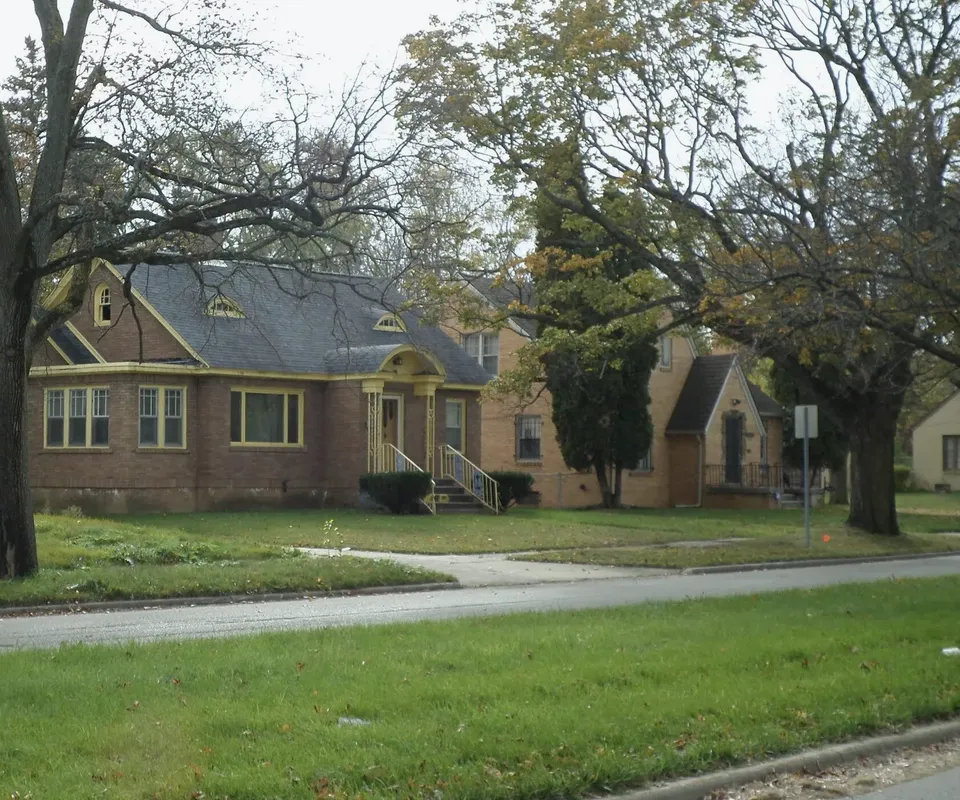
Photograph © kennethaw88, via Wikimedia Commons, licensed under CC BY 4.0. Cropped and colour-graded by Bayfront Home Buyers.

How a sale here actually proceeds
We start with the property, not the postcode
Flint is not one single market. It has neighbourhoods where houses are maintained, occupied and change hands normally, and it has streets where things are tougher. A city-wide statistic will not tell you which is which — the specific address will.
So the sequence is straightforward: you tell us where it is and what it needs, we look at the property and the title position, and we walk you through how a direct sale would work for that particular house.
The housing itself
Age is the practical issue
1954
median year built, City of Flint
About 93.6% of the housing predates 1980, one of the oldest profiles in Michigan.
65.4%
of Flint owner-occupiers have no mortgage
Owning outright changes what the options are.
33.0%
of occupied housing is a rented single-family house
The highest share in our Michigan set — so many sellers here are small landlords.
Source U.S. Census Bureau, American Community Survey, tables B25032, B25035 and B25081 · 2020–2024 five-year estimates, published 29 January 2026 · City of Flint, Michigan. Five-year estimates are a period average. City figures describe the city and not Genesee County as a whole. Accessed 7 August 2026.
These are structural facts about the housing stock, and they are the reason condition comes up in nearly every conversation here. They say nothing about any individual property, including yours.
Something worth correcting
The land bank and your house are different things
Genesee County has a land bank that holds property the county has acquired through its tax-forfeiture process. It is a large, long-established county function, and it is misdescribed in marketing sent to Flint homeowners.
If you own your house, it is not land-bank property. Owing property taxes does not transfer it. The land bank holds property the county has already acquired — a different situation with a different history. We look at ordinary houses whose owners have a decision to make.
If unpaid property taxes are part of your situation, the timings are set by statute and we are deliberately not publishing them on a marketing page. Speak to a HUD-approved counsellor or an attorney promptly — the foreclosure page lists free contacts, none of which are us.
Getting ready
What we look at on a Flint property
The same list we would use anywhere. There is no special Flint assessment.
- The specific addressStreet by street matters, and no city-level figure substitutes for looking at the actual address.
- Condition and what has been replacedRoof and furnace first, given the age of the housing.
- Whether it is occupiedOwner, tenant, family member or empty. An empty house has insurance implications of its own.
- Whether there is a tenancyA third of occupied housing here is a rented house, so a tenancy is a live question for a lot of owners. A sale does not by itself end a valid lease.
- Title and anything owedDelinquent taxes, liens, or an estate that has not been settled.
Nothing here is required before you get in touch. It is simply what makes a first conversation useful rather than vague.
Selling to us
How selling to us works
Six things worth knowing before you get in touch.
We look at the actual house
The condition, the title, and what you are hoping to do — not an address run through a calculator.
Sell as-is
No repairs to arrange first, no contractors to chase, and no clearing the place out before anyone will look at it.
No agent commissions
You are selling directly, so there is no listing commission coming out of the sale, and you can sell as-is without making repairs first.
No showings or staging
Usually one visit, sometimes none at all. You are not keeping the house tidy for strangers on a Sunday afternoon.
We put it in writing
The price and the closing date are written down, so what you agreed to is on the page rather than in somebody’s memory.
Take your time
Read it at your own pace, ask us about anything in it, and have an attorney or a real-estate professional look it over first. We would encourage that.
Questions we actually get
Flint questions
Is it even possible to sell a house in Flint?
Yes. Houses in Flint are bought and sold routinely. What varies is how long it takes and what preparation is needed, and that depends far more on the specific property than on the city.
Do you only buy run-down houses?
No. We look at ordinary houses that need a decision — inherited, tenanted, in need of repair, or simply no longer wanted. We are not a demolition or blight business.
Will you tell me to list it instead?
Sometimes, and we would rather do that than waste your time. In the parts of Flint where houses are maintained and selling normally, a traditional listing will usually get you more money.
Do you have a Flint office?
We work across Flint and Genesee County, and we handle things by phone, by email, and at the property when that helps. Tell us where the house is and what it needs, and we will take it from there.
General information about selling, not advice about your property. No structured FAQ markup is published pending review.
Tell us about the property
The address, roughly what it needs, and who is living there. We will give you a straight answer, including when that answer is that a listing suits you better.
Tell us about your property Call (269) 389-9961
Sending the form starts a conversation. It is not an offer, and it does not commit you to anything.